Alex M. T. Russell: research behind the name
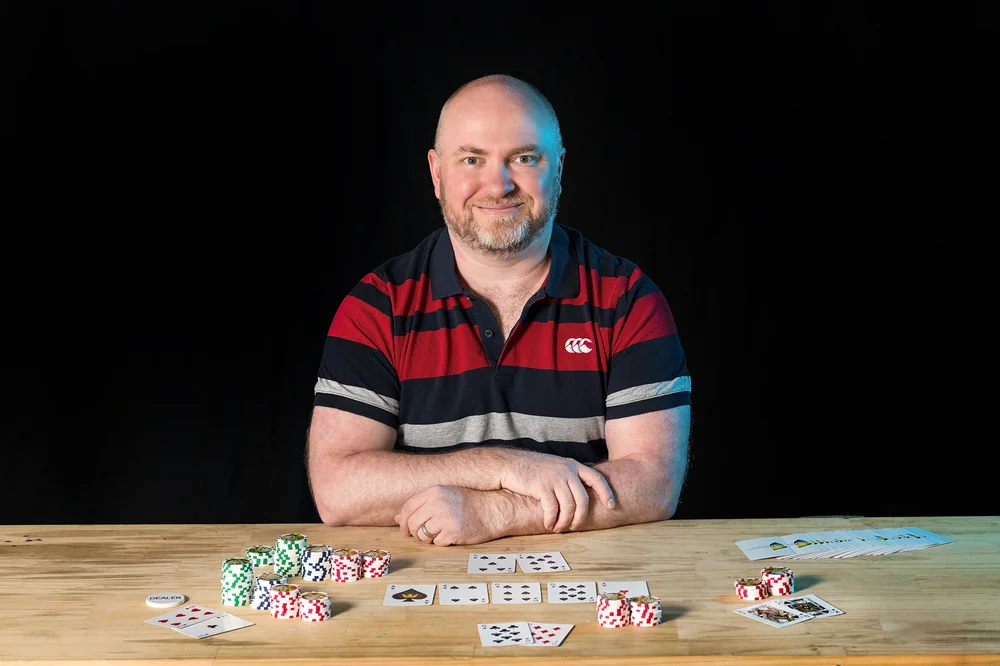
Alex M. T. Russell brings an unusually evidence-focused perspective to gambling-related subjects. His public academic record centres on gambling behaviour, technology, advertising, consumer risk and harm reduction. That background makes his work relevant whenever gambling claims need more than surface-level commentary.
Who is Alex M. T. Russell?
Alex M. T. Russell is a Professor and Professorial Research Fellow at CQUniversity in Australia. He works within the Experimental Gambling Research Laboratory in the School of Health, Medical and Applied Sciences. His current CQUniversity profile lists Sydney as his location and identifies gambling research as a central part of his professional work.
His research focuses on how gambling changes with technology and which consumers face greater risks from those changes. His areas include wagering advertising, inducements, social influences, gambling-related stigma, social media, new gambling formats and vulnerable populations. He also examines responsible gambling behaviours and methods for measuring gambling-related effects.
Alex Russell at a glance
A useful author profile should make qualifications and professional context easy to verify. I therefore base the following snapshot on CQUniversity and other public academic sources rather than promotional biographies. The profile reflects information available in 2026.
Profile detail |
Verified information |
Full professional name |
Alex M. T. Russell |
Current role |
Professor and Professorial Research Fellow |
Institution |
CQUniversity |
Research unit |
Experimental Gambling Research Laboratory |
School |
School of Health, Medical and Applied Sciences |
Current location listed |
Sydney, New South Wales |
Qualifications |
BSc (Psych), GradDipSci (Merit, Psych), PhD |
Main field |
Gambling behaviour and harm research |
Gambling research experience |
Since 2011 |
PhD institution |
University of Sydney |
PhD completion |
2014 |
ORCID |
0000-0002-3685-7220 |
2025 recognition |
Vice-Chancellor’s and Dean’s awards for outstanding research, mid career |
From psychology to gambling research
Russell completed his BSc in Psychology, Graduate Diploma in Psychology with Merit and PhD through the University of Sydney’s School of Psychology. His doctoral research did not begin with gambling, but instead examined how people learn to identify and describe odours in wine. That background developed a strong methodological foundation in perception, experimental psychology and quantitative research.
His move into gambling research began in 2011. CQUniversity records that he initially worked at the Centre for Gambling Education and Research at Southern Cross University, before moving to CQUniversity’s Experimental Gambling Research Laboratory in 2016. That progression gives his current work more than a decade of direct gambling-research context.
Why that research path matters
The transition from experimental psychology into gambling studies is relevant because both fields depend on careful measurement. Behavioural claims need evidence about how people actually respond rather than assumptions about what they should do. Russell’s work consistently uses that evidence-led framework.
His current responsibilities include identifying research questions, designing methodologies, conducting statistical analyses and preparing academic publications. CQUniversity also describes him as a methods specialist with experience in advanced surveys and quantitative analysis. That combination helps explain why much of his gambling work focuses on measurable behaviour rather than anecdotal impressions.
The questions that define his work
Technology is one of the recurring themes across Russell’s research. He studies how digital access changes gambling, how new products emerge and how those changes affect different groups of consumers. His research scope includes online gambling, social casino products, social media and the convergence between gambling and video gaming.
His main research themes include:
- gambling advertising and inducements;
- direct and targeted wagering marketing;
- gambling through emerging technologies;
- social influences on gambling behaviour;
- online and sports wagering;
- impulse and micro-event betting;
- responsible gambling behaviour;
- gambling-related harm and stigma;
- vulnerable consumer groups;
- links between gambling and gaming;
- quantitative research methods and statistics.
Research into advertising and consumer behaviour
One of Russell’s recent research areas concerns the relationship between marketing and gambling expenditure. A 2025 study co-authored by Russell examined direct marketing from wagering operators, tipsters and affiliates and its relationship with betting, spending and gambling harm. The research was published in the Journal of Behavioral Addictions.
That research theme continued into 2026. Russell co-authored a randomised experimental study titled “Direct gambling marketing, direct harm”, published in Addiction in 2026. The paper examined gambling marketing experimentally rather than treating exposure as merely a communications issue.
Looking beyond promotional language
This body of work is useful because gambling marketing frequently relies on framing. Offers can emphasise immediacy, perceived value or convenience while placing conditions elsewhere. Academic research asks a different question: how does that communication affect behaviour?
Russell has also participated in studies concerning dark marketing and consumer attitudes toward wagering promotions. His publication record includes work examining how Australian operators communicate with consumers and how promotional exposure relates to gambling decisions. These subjects make transparency and context central themes in his research profile.
Research into technology and changing gambling formats
Russell’s professional profile specifically highlights technological change as a major research priority. Digital platforms have altered when, where and how gambling can occur, while also enabling increasingly specific products and marketing channels. His research examines which consumers may become more vulnerable as those environments evolve.
An earlier example is his research on micro-event betting in sport. Russell was lead author on a peer-reviewed study examining people who bet on small events occurring within sporting contests. The paper appeared in the Journal of Gambling Studies and demonstrates his longstanding interest in emerging wagering mechanics rather than only traditional gambling formats.
Australian gambling is central to the context
Russell’s academic career gives his work a strong Australian focus. His research has addressed online gambling, wagering advertising, social influences and gambling harm within an Australian regulatory and consumer environment. CQUniversity also highlights the broader contribution of its Experimental Gambling Research Laboratory to Australian gambling policy discussions.
This context is particularly useful for Australian readers because gambling markets are shaped by local regulation and social conditions. Conclusions developed for one jurisdiction cannot always be copied directly into another. Research grounded in Australian participants and policy questions can provide more relevant evidence.
Working with gambling harm as a measurable outcome
Russell has co-authored research examining both gambling participation and gambling-related harm. One national study compared land-based-only, online-only and mixed-mode gamblers in Australia. Other work has explored self-regulatory strategies, consumer experiences of harm and methods for measuring impacts on gamblers and affected others.
This means the research does not reduce harm to a single financial figure. Contemporary gambling-harm studies can examine behavioural, social and wellbeing outcomes alongside expenditure. Russell’s publication record reflects that broader analytical approach.
Independence as part of the research standard
A notable development in 2026 was the first Independent Gambling Research Conference hosted by CQUniversity. Russell convened the event through the Experimental Gambling Research Laboratory, with the conference held on February 23 and 24, 2026. CQUniversity reported that the event did not accept gambling-industry sponsorship and required submissions to demonstrate no funding ties to gambling companies or organisations.
That policy was not merely a branding choice. Independence is particularly relevant in gambling research because commercial interests can overlap with research topics involving marketing, expenditure and consumer harm. A clear funding boundary makes potential conflicts easier for readers to evaluate.
Recognition across research and science communication
Russell’s work has received recognition inside and outside CQUniversity. In 2025, he received both the university Vice-Chancellor’s Award and Dean’s Award for Outstanding Research at mid-career level. Earlier honours include the NSW Young Tall Poppy Award in 2020 and selection for the ABC Radio National Top 5 Scientist program in 2019.
His public engagement extends beyond academic journals. CQUniversity notes regular media interviews concerning gambling and other areas of his research, while Science and Technology Australia has documented his work communicating STEM topics publicly. This ability to translate research matters because gambling evidence often contains statistical concepts that can be difficult for non-specialist readers.
Teaching statistics without hiding behind jargon
Russell has taught statistics and research methods since 2007. His CQUniversity profile describes a particular focus on explaining complex statistical concepts in plain language. He has also received multiple teaching commendations and a 2021 Vice-Chancellor’s Award for Exemplary Practice in Learning and Teaching.
That teaching background complements his gambling research. Gambling information frequently involves probability, sample quality, risk interpretation and uncertain outcomes. Understanding how those numbers are produced is essential before drawing conclusions from them.
How I would describe his evidence standard
Russell’s published profile shows a researcher concerned with methodology as much as conclusions. He works with statistical packages including R, SPSS, MPlus, JASP and Jamovi, and has substantial experience developing surveys through Qualtrics. CQUniversity describes research design and methodological innovation as explicit professional interests.
For readers, the practical lesson is straightforward. A percentage without a sample, method or definition should not automatically be treated as reliable evidence. Good gambling analysis requires understanding where a number came from and exactly what it measures.
Selected areas of published research
Russell has a substantial academic publication record, so a short author page cannot reasonably reproduce it all. His own publication archive includes peer-reviewed journal papers, book chapters and research reports covering gambling, behavioural research and several other subjects. The examples below illustrate the range rather than functioning as a complete bibliography.
Research area |
Example focus |
Gambling marketing |
Direct marketing, promotions and consumer harm |
Sports wagering |
Micro-event betting and betting behaviour |
Online gambling |
Differences between online and land-based participants |
Harm reduction |
Self-regulation and gambling-control strategies |
Gambling information |
House-edge, volatility and RTP communication |
Social influences |
How social environments shape gambling harm |
Emerging products |
Technology, gaming convergence and new formats |
Research methods |
Surveys, statistics and behavioural measurement |
A profile readers can independently verify
The strongest element of Alex M. T. Russell’s biography is traceability. His current position, qualifications, research interests, teaching record and professional history can be checked through CQUniversity rather than relying on anonymous author biography claims. His ORCID and academic publication record provide further ways to distinguish him from people with similar names.
Readers can also review his personal academic website, where he maintains an extensive publication list and research resources. That site describes him as a gambling researcher based in Sydney and explains his focus on technology, gambling risk and harm minimisation. The information closely aligns with the institutional biography maintained by CQUniversity.
What makes Alex Russell relevant in 2026
Gambling in 2026 is increasingly connected to digital delivery, targeted marketing and fast-changing technology. Those are precisely the environments Russell has studied across his research career. His work provides an analytical framework for asking not only what gambling products offer, but how their design and promotion can affect behaviour.
For a Bonobo Casino author profile, that distinction should remain explicit. The verifiable public record supports presenting Alex M. T. Russell as an Australian gambling researcher, professor and behavioural research specialist, not inventing an unverified role as a casino employee or commercial reviewer. In 2026, that evidence-based positioning is considerably stronger than a conventional marketing biography.